TMDb context helps you compare movies quickly and choose candidates that fit your evening. You spend less time cycling through indecision and more time watching titles that match mood and schedule.
Find movies worth your time
Discover movies with context, not guesswork
Novaria combines TMDb-powered discovery with practical tracking so your movie choices stay intentional. Build better shortlists, keep a private watch history, and avoid streaming-driven noise.
Movie discovery often feels random
Many movie nights fail before they start because discovery tools overload users with endless cards and little actionable context. You scroll through posters, save a few options, then still cannot decide. Without reliable details on fit, the process feels random and time-consuming. Discovery should narrow choices with confidence, not create a larger pile of maybes that never translate into an actual watch.
Another issue is weak connection between discovery and tracking. You may find great films in one app, then lose them when planning in another list. Context disappears, priorities drift, and older saves become stale quickly. Without a continuous flow from discovery to watch status, your decisions are repeatedly reset. Over time, this fragmentation erodes trust in your own list and encourages impulsive picks.
Streaming-first environments can also bias decision making. Recommendations are often optimized for immediate playback sessions, not your long-term preferences or available time. That can push attention toward what is convenient for the platform rather than what fits your mood. Users who want intentional curation need a neutral space where finding a movie is about personal fit, not retention metrics.
Privacy and focus matter too. Some users want discovery without public activity feeds or social pressure around taste. If every interaction is framed as engagement content, the process becomes performative instead of practical. A better discovery experience should be calm, contextual, and easy to translate into a private plan you can revisit later.
Novaria turns discovery into decisions
Novaria uses TMDb metadata to make movie discovery more informative. Instead of relying on posters alone, you can evaluate titles with useful context such as genre cues, runtime expectations, release timing, and cast links. This helps you shortlist quickly based on real constraints. Better context means fewer abandoned picks and more evenings that start with a confident choice.
Discovery and tracking live in one coherent workflow. When you save a film, it stays connected to your watchlist and progress states, so the path from interest to completion is clear. You can maintain a high-priority queue, archive low-fit options, and keep watched history accurate without switching systems. This continuity keeps your library useful over time.
Novaria is privacy-first and not a streaming platform, which keeps discovery neutral. The app does not push a single playback ecosystem or optimize for endless session loops. You can decide where to watch independently while using Novaria as your planning and memory layer. That separation supports more intentional habits and protects your attention.
You can add titles to Novaria and build your library as you discover new movies and shows. Migration continuity plus richer metadata gives immediate value: your historical patterns remain available while your future picks become easier to evaluate. The result is discovery that feels practical, not performative.
Benefits of discovery-first planning in Novaria
Saved titles remain connected to statuses and watch history, so interest does not disappear into disconnected tools. This makes follow-through easier and keeps your backlog from becoming stale noise.
Because Novaria is not a streaming service, discovery is not tied to playback retention goals. You get a calmer environment where personal fit guides choices instead of platform incentives.
Novaria's privacy-first approach supports users who want focused planning without public performance loops. Your choices remain your own, which often improves consistency and long-term trust in your list.
Even on movie-focused pages, Novaria still supports TV and anime tracking in one system. This helps when your weekly plan includes mixed formats and you want one reliable source of truth.
Adding titles to your Novaria library helps discovery reflect your tastes over time.
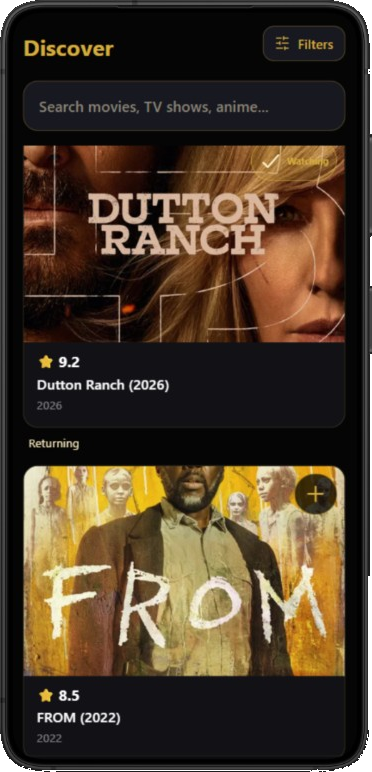
Discover screen preview
Movie discovery questions answered
How does Novaria help me discover movies better?
Novaria combines TMDb metadata with a clean interface so each title is easier to evaluate before you commit. You can compare options using practical context rather than posters alone. This reduces random picks and helps build shortlists that are more likely to be watched.
Is Novaria just a recommendation feed?
No. Discovery is only one part of the workflow. Novaria also provides watchlist management and tracking so saved movies stay organized from first interest through completion. The app is designed for follow-through, not endless browsing.
Does Novaria stream movies directly?
No. Novaria is not a streaming platform. It is a tracking and discovery companion that keeps your planning independent. You watch where you prefer while using Novaria to manage decisions and maintain a reliable viewing history.
Can I track TV shows and anime too?
Yes. Novaria supports movies, TV shows, and anime in the same system. Even if your main goal is movie discovery, unified tracking helps when your schedule alternates between episodic content and standalone films.
Can existing history be imported into Novaria?
You can add titles and track progress directly in Novaria.
Why is privacy-first discovery important?
Privacy-first design keeps focus on your own decision process instead of social signaling or engagement loops. Many users find this calmer environment improves curation quality and makes it easier to maintain a trustworthy long-term watchlist.
FAQ
Can I save discovery filters in Novaria?
You can organize discovered titles through statuses and list structures that make recurring curation easier. The key is keeping your shortlist practical and aligned with your actual viewing capacity.
Does Novaria only surface mainstream films?
No. TMDb-based context supports broad exploration, and your own curation choices remain central. You can build niche or mixed lists without being forced into one popularity lane.
How does Novaria reduce decision fatigue?
By connecting discovery with tracking and prioritization. Titles do not disappear into separate apps, so your shortlist stays clean, relevant, and easier to act on.
Is this useful if I watch only once a week?
Yes. Infrequent viewers often benefit most from better context because each session matters more. Novaria helps you spend less time deciding and more time watching.
Can I migrate from TV Time before using discovery?
You can add titles and track progress directly in Novaria. TV Time import is not available.
Why keep discovery separate from streaming?
A neutral tracker protects your choices from platform incentives. You discover and plan in Novaria, then watch anywhere, keeping control over both attention and preference.
Discover movies with less guesswork
Use Novaria to explore with TMDb context and track what you actually watch.