Logging an episode or marking a movie as watched takes only a moment. Actions are placed where your thumb expects them, and status changes happen without extra popups. That speed matters when you update daily and want your tracking habit to stay effortless.
Switch to a TV Time alternative — start tracking in Novaria
A practical TV Time alternative built for focused tracking
Novaria gives you a calm place to manage movies, TV shows, and anime progress. Add titles manually, organize your watchlist, and discover what to watch next with TMDb metadata in a private, no-streaming experience.
Why people look for an alternative
Many trackers grow noisy over time. Social feeds, promos, and recommendation blocks can crowd the screen until simple progress updates feel like work. If your goal is just to remember what episode you reached last night, that extra noise adds friction. You open the app to log one thing and end up scrolling unrelated cards. A tracking tool should reduce decision fatigue, not create more tabs and more uncertainty every time you check in.
Another pain point appears when movie tracking, TV tracking, and anime tracking are split across different patterns. You may have one workflow for season episodes and another for films, then a separate mental model for anime pacing. That inconsistency leads to missed entries and duplicate watchlist items. Over a few months, your history stops feeling trustworthy. Once the data becomes messy, recommendations become less useful and planning your next week of watching turns into guesswork.
People also worry about ownership of their watch history. If moving to a new tracker feels risky, you delay the switch even when your current setup is frustrating. Nobody wants to re-enter years of watched episodes by hand. A modern alternative should respect existing habits and let you add titles directly in Novaria instead of starting from zero.
Finally, many users prefer a clear boundary between tracking and streaming. They want a companion app that helps them plan, not another service trying to keep them watching inside its own ecosystem. When discovery and tracking are designed around engagement loops, your priorities can get sidelined. A useful tracker should stay neutral, protect your attention, and help you decide intentionally what to watch next based on your own taste and schedule.
How Novaria approaches tracking
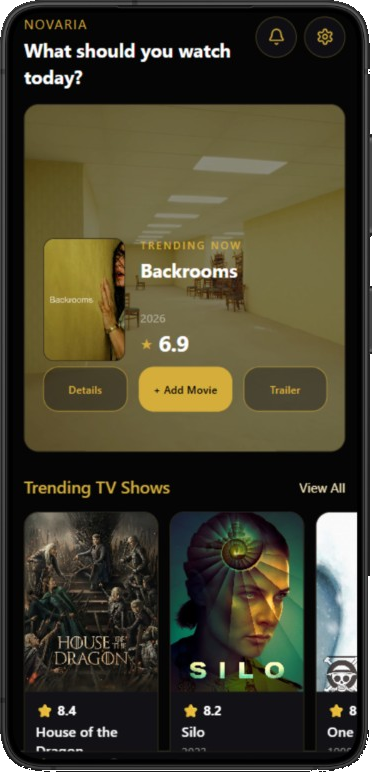
Novaria is designed around one primary job: keep your watch progress accurate and easy to update. The interface favors quick actions, clear status states, and predictable navigation, so you spend less time hunting for buttons. Movies, TV shows, and anime share the same interaction language, which makes daily use feel natural. Instead of a crowded feed, you get practical tracking views that highlight unfinished items and recent activity you actually care about.
If you are leaving TV Time, you can add titles manually and track progress directly in Novaria. Your previous watch patterns still matter, and you can organize entries with consistent lists and filters. That means your backlog finally becomes actionable. You can separate active series from paused ones, keep weekend movie ideas visible, and maintain a reliable history you trust.
Discovery is powered by TMDb metadata, giving you strong context when choosing your next title. You can browse by genre, popularity, release windows, and detailed credits without leaving your tracking flow. Because metadata quality stays high, your decisions feel informed instead of random. You are not forced into endless autoplay logic. Novaria keeps discovery helpful and lightweight, so finding something new supports your plan rather than interrupting it.
Privacy and focus are built into the product direction. Novaria is not a streaming platform and does not try to replace your viewing services. It acts as a private tracking layer that helps you remember, organize, and decide. This separation is valuable for people who want control over their entertainment habits. You keep ownership of your personal progress data, avoid unnecessary distractions, and maintain a cleaner routine around what and when you watch.
What you gain after switching
Movies, shows, and anime follow one clean model, so you do not need to relearn flows. The consistency reduces mistakes, keeps your history accurate, and makes long-term planning easier when your watchlist spans multiple formats and release cadences.
Novaria helps you track movies, TV shows, and anime in one organized library.
TMDb metadata adds context like cast, genres, runtime, and release signals, so picks feel intentional. You spend less time opening random tabs and more time selecting titles that fit your mood, available time, and current backlog priorities.
Novaria keeps focus on your personal tracking journey rather than engagement loops. You get practical organization tools without social noise dominating the experience. That makes the app calmer and better suited for people who value control and discretion.
Because Novaria is a tracking app, not a streaming destination, your choices stay flexible. Use any service you prefer for playback while keeping one trusted record for progress and planning. The separation prevents platform bias from shaping your watchlist.
See the focused tracking experience
Questions people ask before switching
Is Novaria a real TV Time alternative or just another recommendation app?
Novaria is a true tracking-first alternative. The core experience centers on logging watched movies, episodes, and anime progress with minimal friction. Recommendations are supportive, not dominant, and they rely on TMDb metadata to provide context. The app is intentionally not a streaming platform, so it stays focused on planning and history.
Can I import my TV Time history into Novaria?
No. TV Time import is not available in Novaria. You can add titles and track progress directly in the app.
Does Novaria track anime and movies in the same app?
It does. Novaria handles movies, TV series, and anime in one consistent system, so you avoid separate trackers and fragmented watch habits. Shared filters and status controls make it easier to prioritize unfinished titles, compare runtimes, and keep all entertainment plans visible from one private dashboard.
How does discovery work if Novaria is not for streaming?
Discovery uses TMDb metadata to surface useful details such as genres, release dates, cast links, and popularity signals. You browse and shortlist within Novaria, then watch on whichever external service you prefer. This approach keeps discovery informative while preserving user choice and avoiding platform-driven playback pressure.
Is Novaria good for people who care about privacy?
Novaria is built with a privacy-first mindset, emphasizing personal tracking utility over attention extraction. The product avoids turning your routine into a noisy social feed and keeps focus on your own progress records. For many users, that calmer design improves trust and helps tracking stay sustainable long term.
Who should switch from TV Time to Novaria today?
Anyone frustrated by cluttered interfaces, inconsistent list management, or limited control over watch planning will likely benefit. If you want an app that tracks accurately, leverages TMDb for discovery, and stays neutral about where you stream, Novaria is a practical next step.
FAQ
Does Novaria let me stream shows directly?
No. Novaria is intentionally a tracking and discovery companion, not a streaming app. You log progress, manage watchlists, and decide what to watch with better context, then use any external service for playback.
Can I edit titles I add manually in Novaria?
Yes. Titles you add manually in Novaria can be reviewed, corrected, and reorganized. You can adjust statuses, remove duplicates, and align lists with your current habits so your library reflects how you watch today.
Can I use Novaria only for anime tracking?
Absolutely. Many users track only anime, while others combine anime with movies and shows. The same workflow supports both approaches, so you can keep things narrow or expand later without changing tools.
Why is TMDb metadata useful in a tracker?
Good metadata improves decision quality. When runtime, cast, release timing, and related titles are accurate, you can pick better matches for your available time and taste instead of relying on vague memory.
Is Novaria suitable for casual watchers too?
Yes. Casual watchers benefit from quick logging and simple watchlists just as much as heavy users. You do not need complex setup to get value; the app becomes useful after only a few tracked titles.
What makes Novaria feel different day to day?
The app removes unnecessary noise and keeps practical tasks front and center. That small daily convenience compounds over time, giving you cleaner history, less friction, and better confidence in your next watch choice.
Ready for a cleaner tracker?
Switch from TV Time with confidence, build your progress as you track in Novaria, and keep everything in one private place.