Novaria helps you separate high-priority films from long-term ideas, so your list reflects what you actually want to watch soon. That simple distinction reduces choice paralysis and turns random scrolling sessions into clear, finishable plans.
Know exactly what to watch next
The movie tracker that keeps your list usable
Novaria helps you capture watched films, prioritize your backlog, and discover new titles through rich TMDb metadata. It is privacy-first, focused on tracking, and never tries to replace your streaming services.
Movie tracking usually breaks over time
Most people start with good intentions: save films they want to watch, mark completed titles, and keep a short queue for weekends. Over time the list grows, priorities shift, and old entries stay untouched. Without structure, your watchlist becomes a parking lot instead of a plan. When the app does not make triage easy, you stop trusting the order and postpone decisions until movie night becomes a frustrating loop of scrolling.
A second problem is context quality. You remember a title name but forget tone, runtime, cast, or whether it fits your evening. If metadata is shallow or inconsistent, every decision requires external research across tabs. That extra effort reduces follow-through and leaves good candidates buried. A tracker should help you decide in-app, not force a separate research ritual each time you want one clear, confident pick.
Noise is another issue. Some apps place social content, engagement prompts, and unrelated recommendations ahead of your own backlog. You open the tracker to check one film and lose focus in a flood of cards. The more distractions appear, the less likely you are to maintain a clean history. Consistent tracking depends on fast, intentional actions that respect your time and attention.
People who also track shows or anime face fragmentation. They may use one tool for films and another for episodic content, which creates conflicting priorities and duplicated entries. A movie tracker should still fit your wider watch habits because planning rarely happens in isolation. If your systems do not talk to each other, choosing what to watch tonight becomes harder than it needs to be.
Novaria keeps movie tracking practical
Novaria gives movies a clean, action-oriented workflow. You can mark watched titles, queue candidates, and revisit unfinished plans without digging through clutter. The interface is built for quick updates so maintenance feels light even when your list gets large. By keeping the core flow predictable, Novaria helps you preserve accurate history, which makes future planning easier and far less mentally expensive.
Discovery is strengthened by TMDb metadata, so each film card carries useful detail: genres, release timing, runtime expectations, and people involved. That context improves confidence before you commit to a watch. Instead of opening five tabs to remember what a title is about, you can evaluate fit inside the tracker. Better context means fewer abandoned starts and better alignment with mood and available time.
Novaria stays intentionally neutral about streaming. The product does not push playback lock-in or engagement loops. It acts as your planning and memory layer while you continue watching wherever you prefer. This separation protects decision quality because recommendations are not tied to a single viewing destination. You choose the service, while Novaria keeps the record and helps you compare options clearly.
You can add titles and track progress directly in Novaria. That reduces hesitation when switching tools and allows immediate continuity. Once data is in Novaria, you can refine statuses and clean duplicates using one consistent model. The result is a movie tracker that remains useful month after month instead of collapsing into unread backlog noise.
Benefits for everyday movie planning
TMDb metadata gives enough context to decide quickly, including runtime and genre fit. You avoid surprise mismatches and pick films aligned with your available time, energy, and mood without needing to research outside the app.
A reliable watched log helps you avoid repeats, remember favorites, and revisit overlooked directors with purpose. Because updates are fast, you are more likely to track consistently, which improves the quality of your future decisions.
Even if movies are your main focus, Novaria can also track TV and anime with the same logic. Shared workflows reduce fragmentation and make it easier to decide between a film and an episode on any given night.
Novaria emphasizes personal utility over noisy social mechanics. You get a calm environment where your own lists and progress matter most, helping you build a sustainable routine that feels private, intentional, and low stress.
Because Novaria is not a streaming product, recommendations are not designed to trap attention in one ecosystem. You stay flexible across services while maintaining one trusted source of truth for movie tracking and planning.
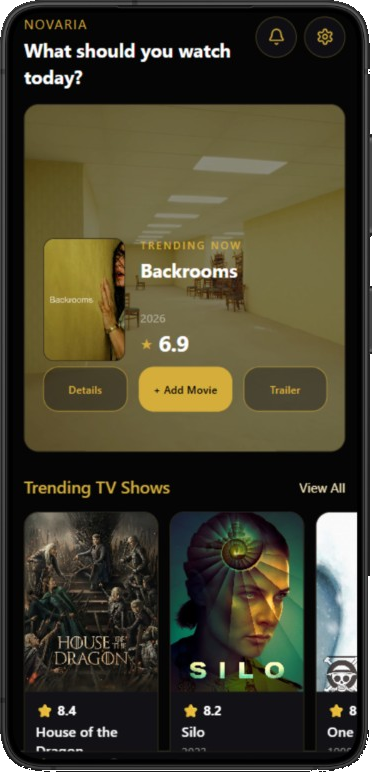
Movie-focused tracking home
Movie tracker questions answered
What makes Novaria different from a basic movie watchlist app?
Novaria combines fast tracking actions with richer decision context from TMDb metadata, so your watchlist stays practical instead of becoming a stagnant archive. It focuses on progress and planning rather than social noise. You can maintain accurate history and make better picks without leaving the app for repeated research.
Does Novaria include streaming playback?
No, and that is intentional. Novaria is a dedicated tracking companion, not a streaming platform. You decide where to watch, while Novaria keeps your watch history, backlog priorities, and discovery flow organized. This separation avoids platform bias and helps you keep control of your entertainment decisions.
Can Novaria still help if I track TV shows too?
Yes. Although this page is movie-focused, Novaria supports TV shows and anime in the same ecosystem. That unified model makes weekly planning easier when you alternate between films and episodic content. You can keep one consistent set of statuses and lists instead of juggling separate trackers.
How does TMDb metadata improve movie discovery?
TMDb metadata adds practical detail such as cast links, genres, release information, and runtime clues. That context makes comparisons faster and helps you pick titles that fit your evening. Instead of guessing from a poster alone, you choose with enough information to avoid decision regret.
Can I move existing progress into Novaria?
You can add movies and track progress directly in Novaria.
Is Novaria suitable for people who value privacy?
Yes. Novaria follows a privacy-first product direction and avoids turning your routine into a public performance feed. The emphasis stays on your personal tracking utility. For many users, this calmer approach improves trust and makes consistent logging easier to maintain over long periods.
FAQ
Can I rank movie priorities in Novaria?
Yes. You can organize your watchlist so near-term picks stay visible while long-term ideas remain stored but not distracting. That structure makes nightly decisions faster and reduces backlog overwhelm.
Is Novaria only for heavy movie fans?
No. Casual watchers benefit too because quick tracking prevents forgotten titles and repeated browsing. Even a small list becomes easier to manage when status and context are always available in one place.
Does Novaria recommend only popular blockbusters?
Discovery uses TMDb metadata to provide broad context, not a narrow blockbuster-only feed. You can explore by genre and release cues while still following your own taste, mood, and pacing preferences.
Why avoid a streaming-first tracker?
Streaming-first products often optimize for session length, not planning clarity. Novaria keeps tracking independent, so your decisions are based on your goals rather than whichever service wants immediate playback.
Can I revisit watched history for patterns?
Yes. A clean watched log helps you see what you finish, what you postpone, and which genres you return to. Those patterns improve future curation and reduce low-fit picks.
What if I migrate from TV Time later?
Novaria helps you track movies, TV shows, and anime in one organized library.
Make your movie list useful again
Track films with clarity, discover smarter with TMDb metadata, and keep planning private in Novaria.